
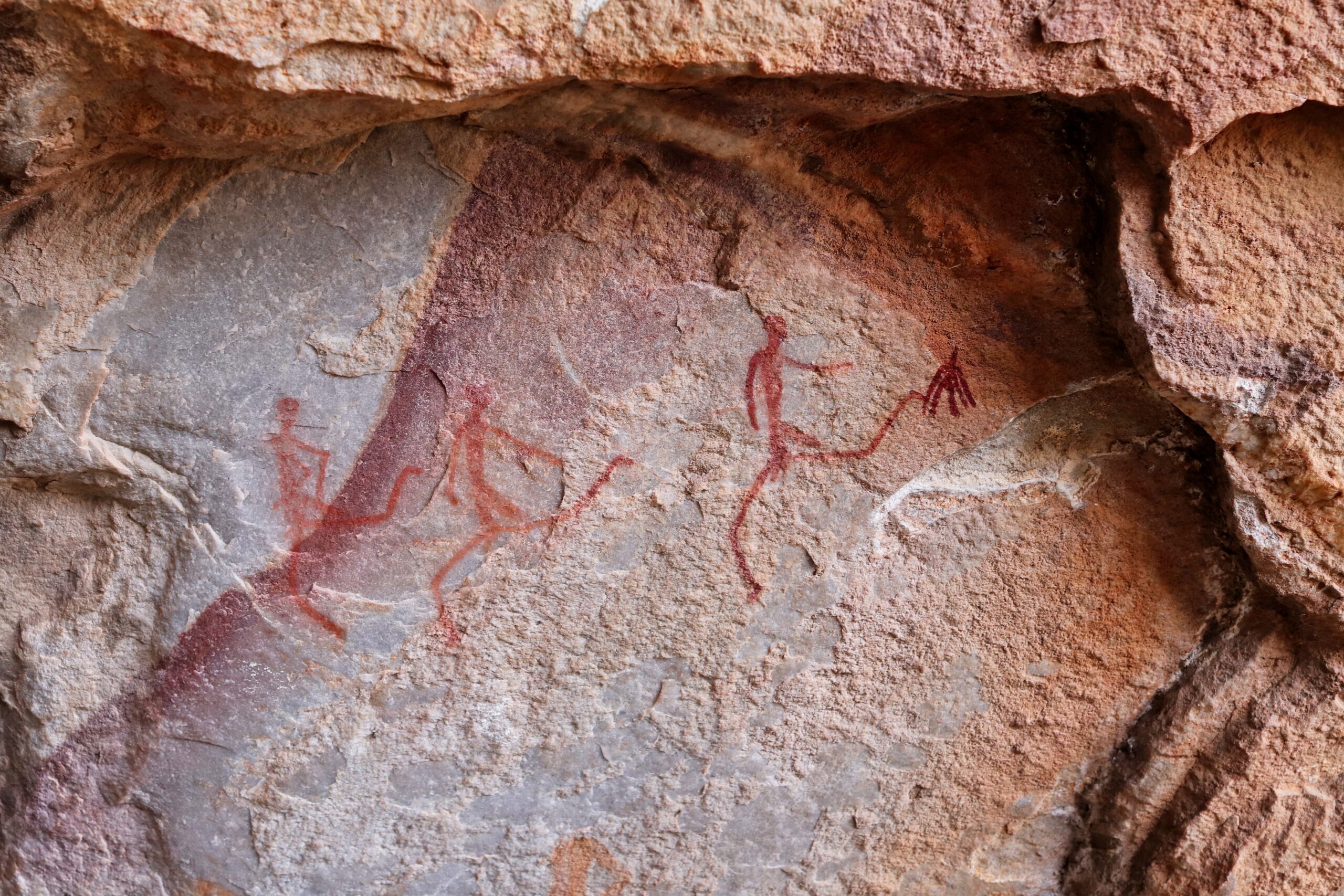
Exploring Prehistoric Art: Humanity’s First Creative Expressions
Long before cities, writing, or recorded history, humans were already artists. Prehistoric art offers a remarkable window into the lives, beliefs, and creativity of our earliest ancestors—revealing that the drive to create is as ancient as humanity itself.
What Is Prehistoric Art?
Prehistoric art encompasses all artistic creations made before the invention of writing (circa 3,000 BCE), spanning the Paleolithic, Mesolithic, and Neolithic periods (from roughly 2.5 million years ago). Unlike modern art, these works were not merely decorative—they were tied to survival, spirituality, and social identity.
Key Forms of Prehistoric Art
- Cave Paintings & Rock Engravings – Found in deep caverns like Lascaux (France) and Chauvet (Europe), these often depict animals, human-animal hybrids, and mysterious symbols.
- Portable Art & Sculptures – Small carvings like the Venus figurines (fertility symbols) and intricately decorated tools.
- Petroglyphs & Pictographs – Rock carvings (petroglyphs) and paintings (pictographs) in open-air sites worldwide.
- Decorated Objects – Jewelry, pottery, and weapons adorned with symbolic patterns.
These artifacts have been discovered across Europe, Africa, Australia, and the Americas, proving that art was a global human impulse.
Why Did Early Humans Create Art?
While interpretations vary, leading theories suggest prehistoric art served:
A Universal Human Legacy
Despite vast distances and cultural differences, prehistoric peoples used similar techniques—ochre pigments, stone tools, and symbolic repetition—suggesting that art is an intrinsic part of human nature.
Why Prehistoric Art Still Matters
These ancient works are more than relics—they are the foundation of human culture. In every stroke, carving, and symbol, we see the birth of storytelling, spirituality, and self-expression. They remind us that art is not a luxury but a fundamental part of what makes us human.